Cold water immersion · Buying
Horsepower sells a cold plunge. The wall around the water is what you pay for every day after.
Four tanks from one California workshop hold the same 95 gallons. Their published standing draw runs from 120 watts to 240.
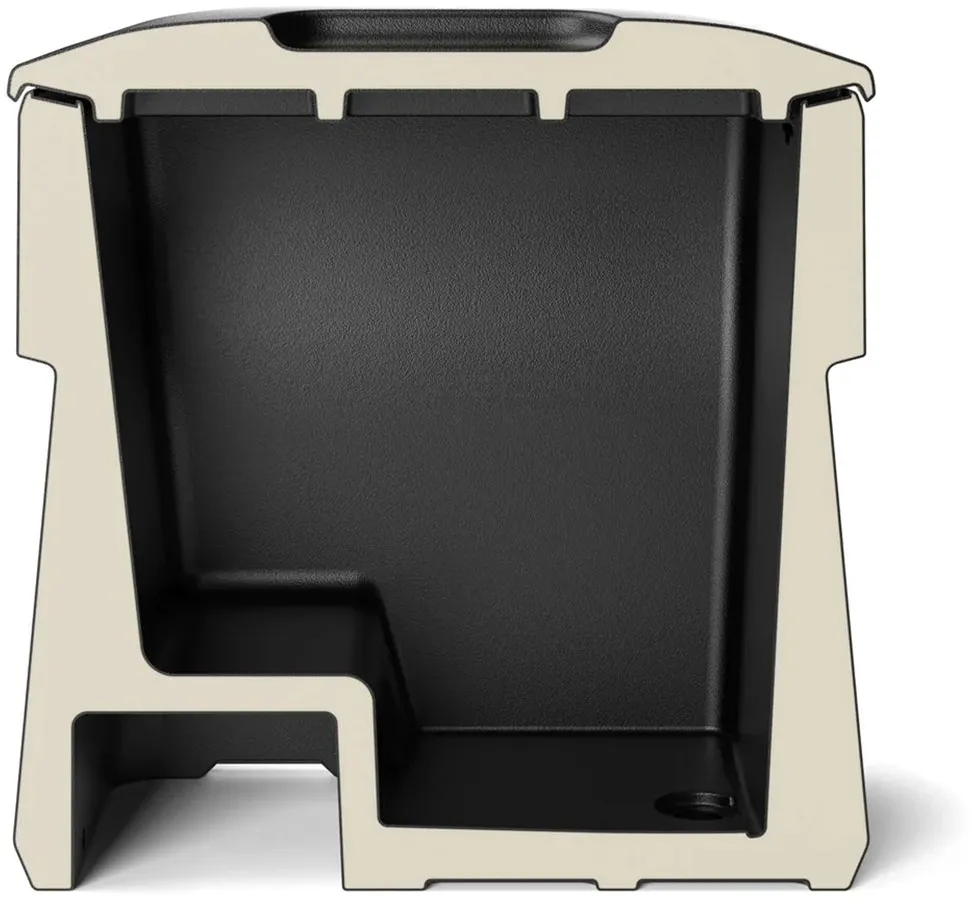
There is a moment in a cold plunge showroom when the numbers stop helping. Every tank in the room says 37 degrees. Every one of them says commercial grade, all weather, built to last. They are all dark, they all have a wood lip, and they all have a compressor humming somewhere inside a cabinet.
The way out of that moment is one number, and it is almost never on the sales page.
Renu Therapy puts it on the cut sheet of every tank in this article. Halfway down page two there is a small table headed Power Use Under Load, and in the right hand column sits the average power the machine draws over 24 hours while it holds 40 degrees. Not the peak. The average. Which is to say, the number you actually live with.
Line those numbers up across the range and something strange happens.
Published on the Renu Therapy cut sheets
| Tank | From | Perimeter insulation | Chiller | Peak draw, cooling | 24 hour average at 40°F |
|---|---|---|---|---|---|
| Cold Stoic 2.0 | $9,499 | 4 in | 0.25 HP | 450 W | 120 W |
| Cold Stoic 3.0 | $11,399 | 4 in | 0.5 HP | 518 W | 130 W |
| Aurelius | $9,999 | 4 in | 0.5 HP | 518 W | 130 W |
| Vero | $7,200 | 2 in | 0.8 HP | 1,080 W | 240 W |
Cut sheets for the Vero, Cold Stoic 2.0, Cold Stoic 3.0 and Aurelius, published on renutherapy.com. Insulation depths from the published comparison table. Prices are the starting configuration.
All four tanks hold the same 95 gallons of water. Every cut sheet says so on the weight line, where the filled figure is given "with 95 US Gallons". Same water, same job, same 40 degree target.
And the tank with the biggest compressor draws twice as much power to stand still as the tank with the smallest one.
That is not a defect. It is the whole trade, printed by the manufacturer, and once you can read it you can read any cold plunge on the market.
This article is about equipment. It makes no claim about what cold water does to a body, and nothing here is medical advice.
Horsepower makes cold. Insulation keeps it.
A cold plunge is a chest freezer you sit in, and a chest freezer has two jobs that get confused with each other constantly.
The first job is the pull down. You fill 95 gallons from a garden hose at whatever your tap runs, maybe 70 degrees in August, and the machine has to take all of it down to 40. Renu puts the rate at roughly 1 to 2 degrees an hour on its FAQ page, and adds that in hot climates a full pull down can take a day to a day and a half. That job is pure compressor. Horsepower is exactly what shortens it.
The second job is the hold, and the hold is almost all of the machine's life. Once the water is at 40, the compressor is fighting nothing but heat leaking back in through the walls, the lid and the plumbing. Renu describes the cycle plainly on the same page: the chiller runs until the set temperature is reached, then the fan and compressor shut off, and it restarts when the water rises 2 or 3 degrees.
So the 24 hour average is a measurement of the leak. It is the rate at which the outdoors gets back into your water, expressed in watts. Nothing else it could be.
Average power over 24 hours, holding 40°F
Same 95 gallons in every tank. Perimeter insulation and chiller size under each name.
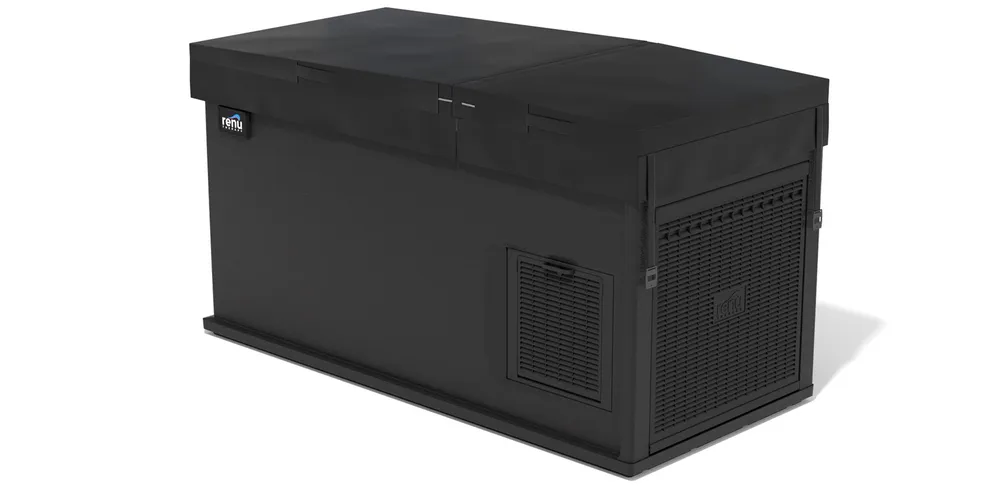
Two things add up inside that average, and Renu publishes one of them separately. On the Vero, the circulation pump is listed at 100 watts and it runs continuously, turning the whole tank over roughly every 10 minutes so the filter and the ozone system see all the water. Subtract it and you are left with about 140 watts of averaged compressor work to hold 40 degrees behind two inches of insulation. On the four inch tanks, the entire machine, pump included, averages 120 to 130.
Run it out to a year and the gap is easy to hold in your head:
240 W around the clock
120 W around the clock
multiply by your own rate
Whether that gap matters depends entirely on what a kilowatt hour costs where you live, and that is your number, not theirs. The point is not that one tank is wrong. The point is that you can only run this arithmetic on a company that published the input. Every chiller ever built has a 24 hour average, because somebody had to size the compressor against it. Whether the figure reaches the buyer is a decision a company makes.
Four inches at the perimeter, one and a half under the floor
Renu draws the wall rather than describing it. The cutaway below is theirs, published on the Cold Stoic product page, and the two callouts on it are the entire argument of this article rendered as a picture.
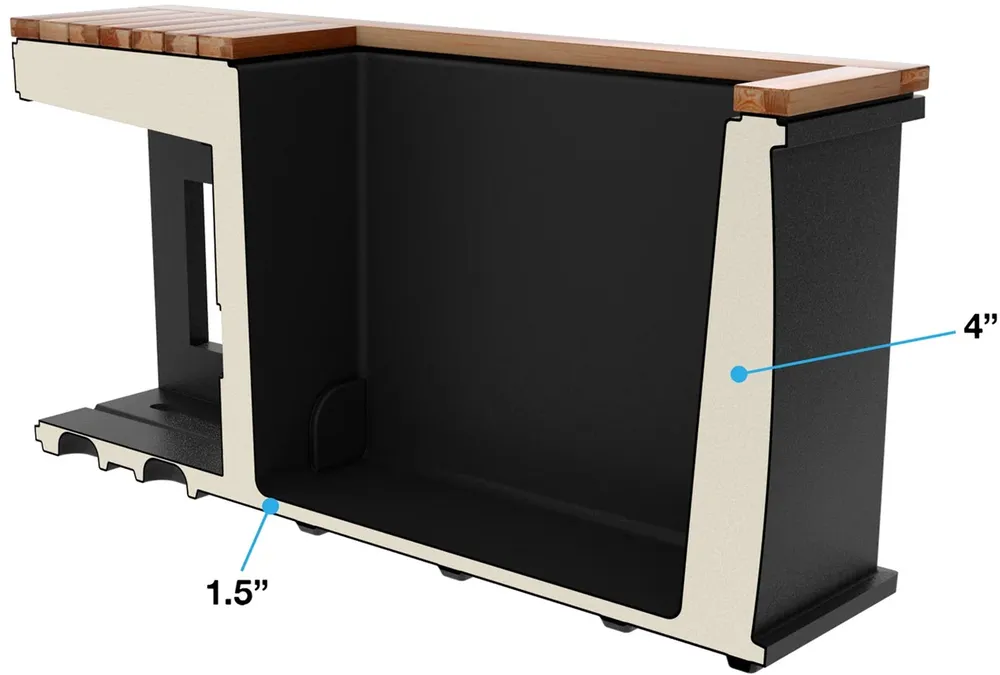
Notice what the drawing gives away. The number people repeat, four inches, is the perimeter. The floor is published at one and a half. That is not a company hiding something, it is a company telling you where its engineering effort went, and it is the kind of detail that only appears when someone is willing to publish a section view at all.
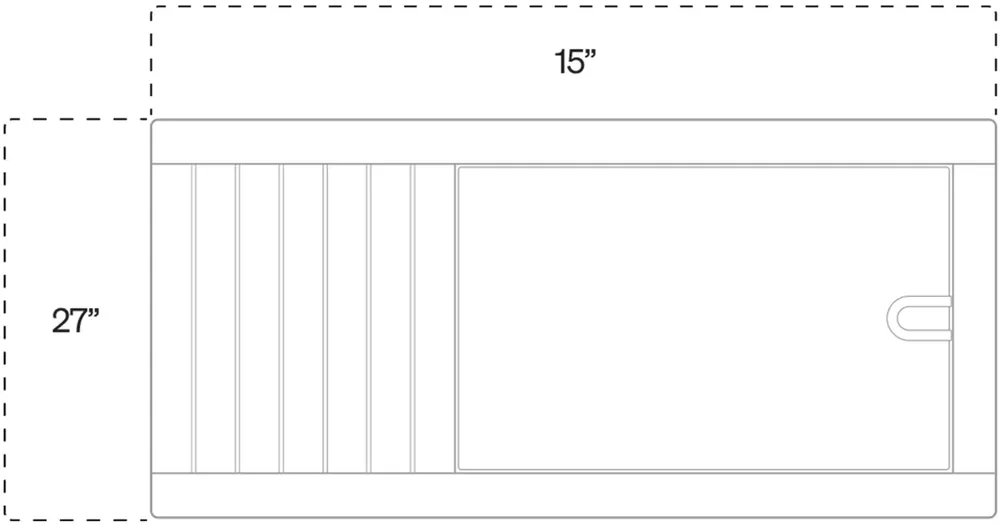
The physical rule underneath is unglamorous. Heat crosses a wall in proportion to the area it can cross and in inverse proportion to how thick that wall is. Halve the thickness and you roughly double the leak. Shrink the tank and you shrink the area, which claws some of it back. The Vero does both at once: it is much smaller than a Cold Stoic and its wall is half as thick, and it lands at exactly twice the standing draw.
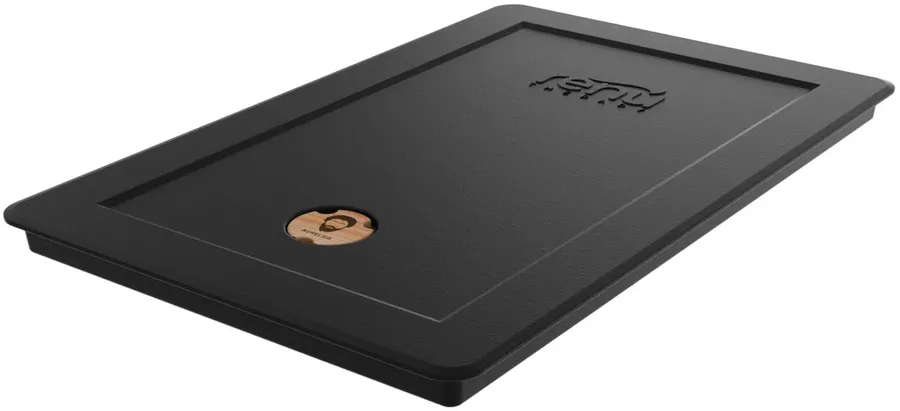
This is also why the lid is not an accessory. Renu includes an insulated cover with child safety locks on the Aurelius and the Vero, lists it at $499 in its own accessories catalog, and prices it as a $400 option on the Cold Stoic 3.0 configurator. One owner put the reason better than a spec sheet could.
The hard plastic cover sits nearly flush with the top of the wood deck, giving the entire device a beautiful look. This is important because the cover is on 23 hours, 50 minutes per day! Joseph S., verified purchase, 5 out of 5, on the Cold Stoic 2.0. renutherapy.com
What the horsepower is actually for
None of this makes a big compressor pointless. It makes it purposeful. Horsepower buys three specific things, and all three are worth money to some buyers and nothing to others.
1. It buys back your first day
At 1 to 2 degrees an hour, filling a tank in a warm month is an overnight affair. It is also what happens after a water change, which Renu puts at every four to six months. A bigger compressor shortens every one of those days.
2. It buys recovery between people
Three adults through a 95 gallon tank on a Saturday morning move the temperature. The machine has to take it back down before the fourth person arrives. That is a pull down in miniature, and it happens on the same curve.
3. It buys geography
This is the one that decides whether a spec sheet is telling you the truth. Every published minimum temperature is a capability at some ambient condition, and the ambient condition is rarely stated. A tank that reaches 37 degrees in a shaded Southern California garage may not reach it in a Phoenix side yard in July. Renu's own reviews say so, from both directions, and they leave both up.
It keeps the water perfectly at 47 degrees all day even when the heat index reaches 114. JON M., verified purchase, 5 out of 5, Cold Stoic 2.0 in an outdoor building with no air conditioning, North Texas. renutherapy.com
The system looks amazing but the chiller has trouble in the summer to maintain the set temperature. I live in PHX but the system is shaded all day. Michael M., verified purchase, 4 out of 5, Cold Stoic 2.0, Phoenix. renutherapy.com
A third owner, indoors at 75 degrees and 50 percent humidity, reported the same ceiling from the other side of the country: the chiller could be set to 36 but the water would not go below 40. He gave it four stars and said the build quality was superb anyway, which is a fair reading of a real machine.
The Phoenix reviews are worth reading precisely because they are still there. They are also the reason the 0.8 horsepower unit exists in the range at all. If you live somewhere the summer does not forgive, the size of the compressor is not a vanity number, it is the difference between a tank that holds your setpoint and a tank that hovers three degrees above it from June to September.
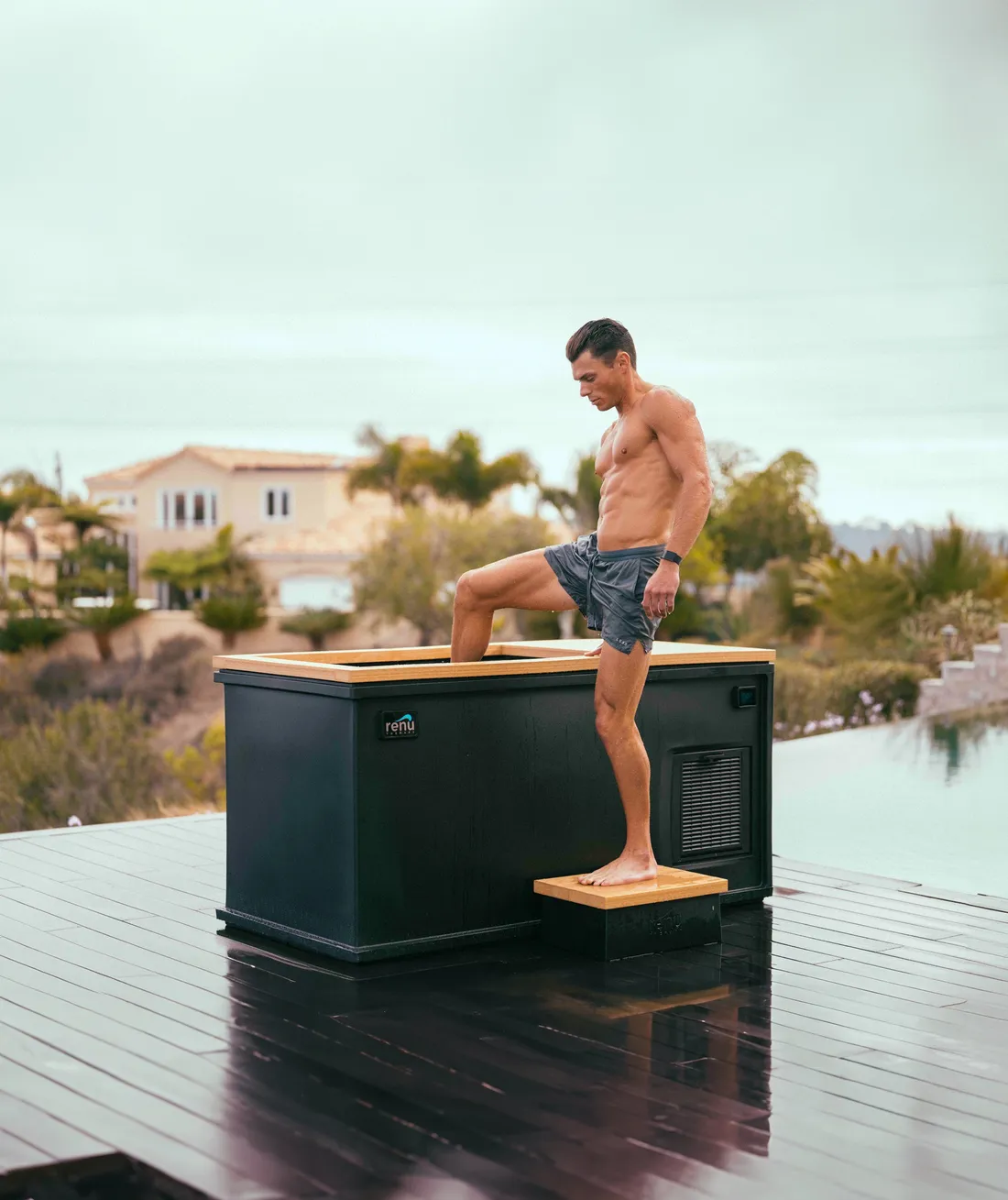
And when it does not work, being a manufacturer rather than an importer turns out to be a real specification.
Living in Arizona proved to be a challenge at first in maintaining a cold enough temperature. Bill Bachand worked exchanging out a chiller to make the tub work in our extreme heat. Laurie L., verified purchase, 5 out of 5, Siberian. renutherapy.com
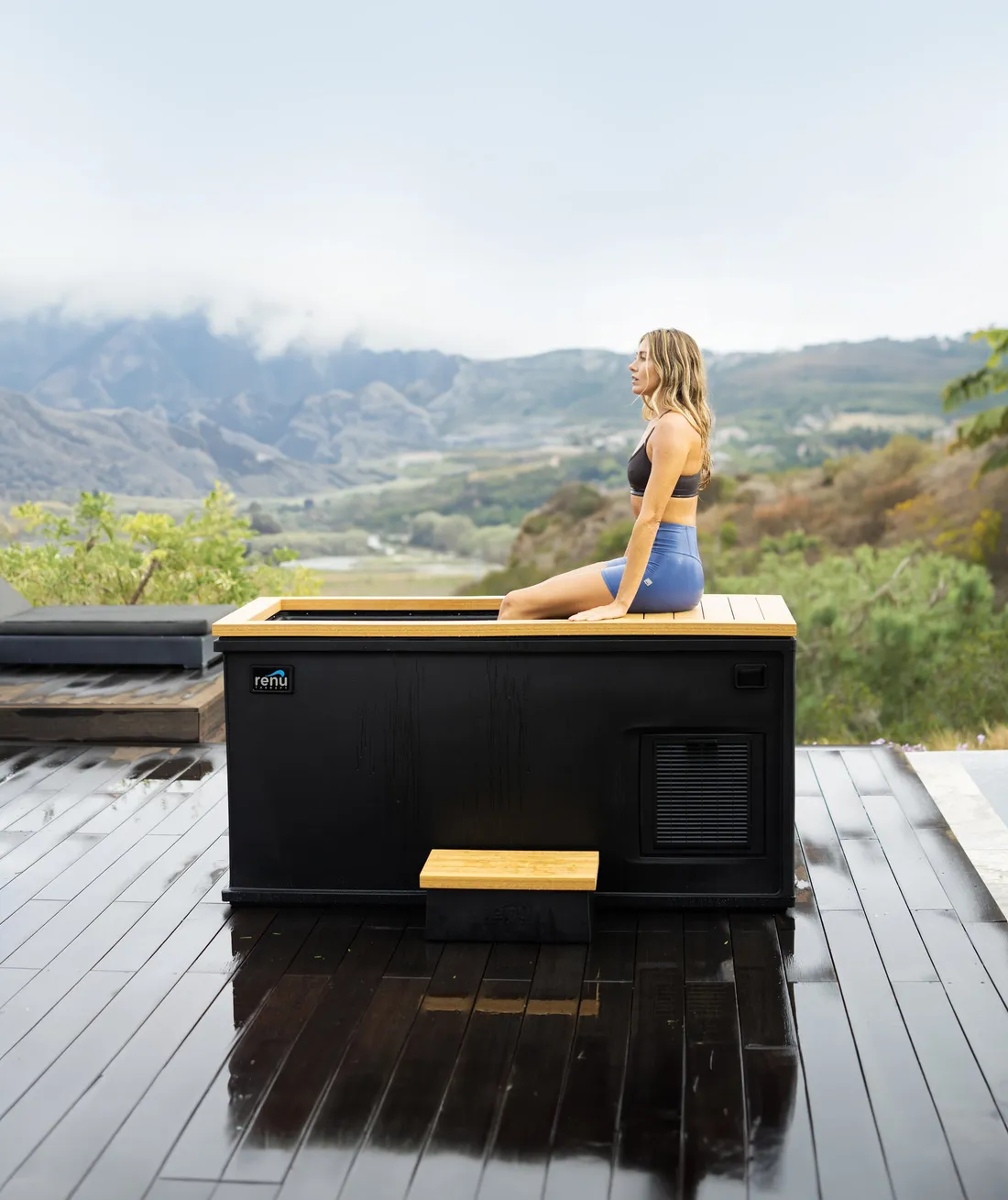
Noise, published at a stated distance
The pump never stops. That is the price of filtered water without chemicals, and it means a cold plunge is never a silent object in a garden. What separates the serious manufacturers is whether they will put a decibel figure next to a distance.
Noise ratings, from the cut sheets
| Cold Stoic 2.0 / 3.0 / Aurelius | 58 dB | at approximately 3 feet from the large grill |
| Vero | 62 dB | at 36 inches in front |
Four decibels apart on a logarithmic scale. Audible in a quiet garden, unremarkable in a garage.
Owners split on it in a way that maps almost perfectly onto where the tank lives. Outdoors and in garages, the verdict is that it is quiet. Inside the house, it is a pool pump.
Sound of the chillier and pump are whisper quiet compared to some of the other cold plunges I have tried. Water stays clean and clear. Jordan C., verified purchase, 5 out of 5, Cold Stoic 2.0. renutherapy.com
I would not recommend it inside the house as the pump runs all the time like a pool so the noise would get bothersome but from inside the attached garage we cannot hear anything. Christelle G., verified purchase, 5 out of 5, Cold Stoic 2.0. renutherapy.com
Both of those are five star reviews. Neither is a complaint. They are the same machine described by two people who put it in different rooms, which is the most useful thing a review can be.
Water, measured in microns and in dollars a year
Every Renu tank ships with an ozone generator and a 50 micron filter, and the company is explicit that the system is designed to avoid chemicals. The 3.0 and the Aurelius run two stages: a quick swap external cartridge that catches the large debris and a larger internal filter behind it for the fine particles, which is what stretches the interval between changes.
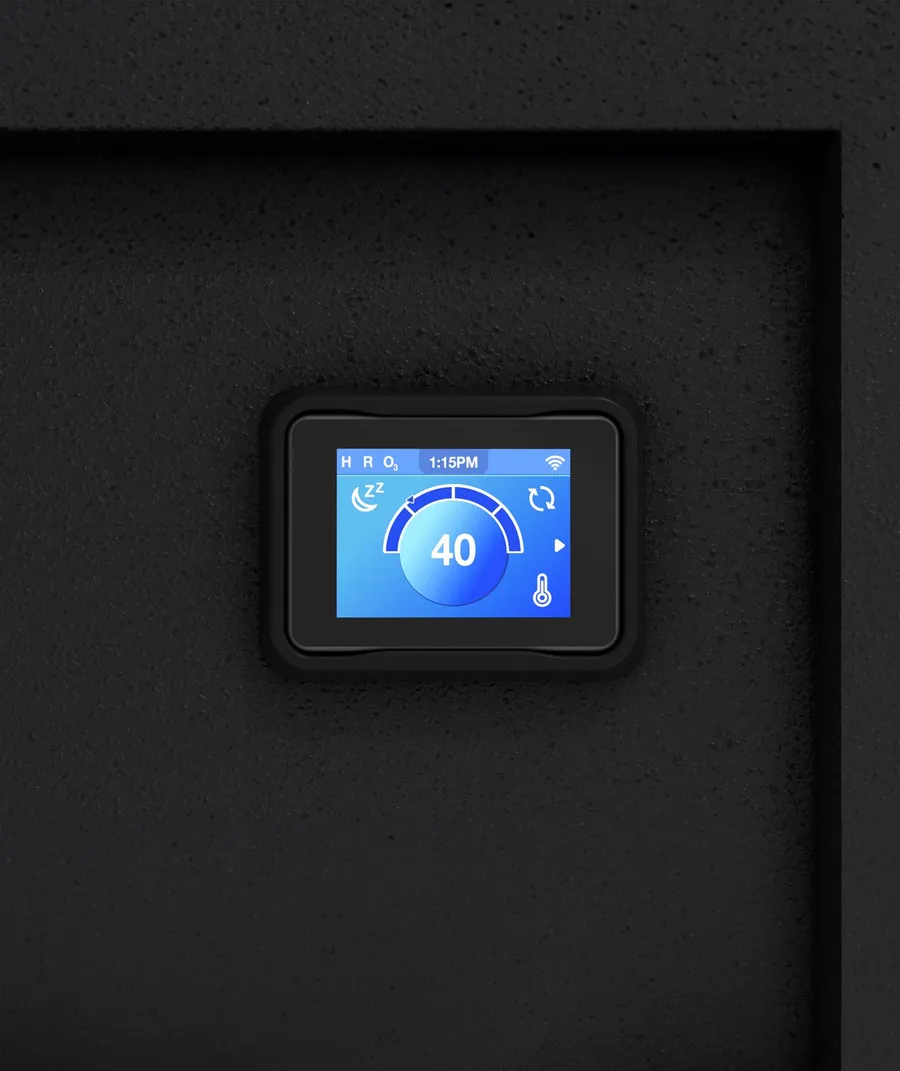
Here is the part almost nobody prices before buying. Renu publishes both the cadence and the parts list, so the arithmetic is available:
Consumables, at published prices
| Standard filters, 12 pack (Cold Stoic 2.0, Siberian) | $67 |
| Primary filters, 6 pack (Cold Stoic 3.0, Aurelius) | $99 |
| XL secondary filters, 6 pack | $89 |
| Quarterly maintenance package | $80 to $85 |
| Annual maintenance package | $279 to $299 |
| Water treatment kit | $75 |
| Sanitizing spa stick | $27.99 |
| Oil and dirt absorbing buoys, 2 pack | $39.99 |
Published cadence: filters every two to six weeks, with most owners at two to three. Water changes every four to six months. Prices from renutherapy.com, August 2026.
Two to three weeks is roughly seventeen to twenty six filter changes a year. Put that against a twelve pack and you have a real line item rather than a vague worry, which is the only honest way to compare a self contained tank against the cost of hauling ice.
The deck is the only part with a maintenance schedule
The wood on top of a Renu tank is real wood. California Redwood and Pacific Cedar are handcrafted breath decks, and they behave exactly the way outdoor wood behaves: they need oil, and they age faster in full sun. Renu sells the oil, which is a form of honesty.
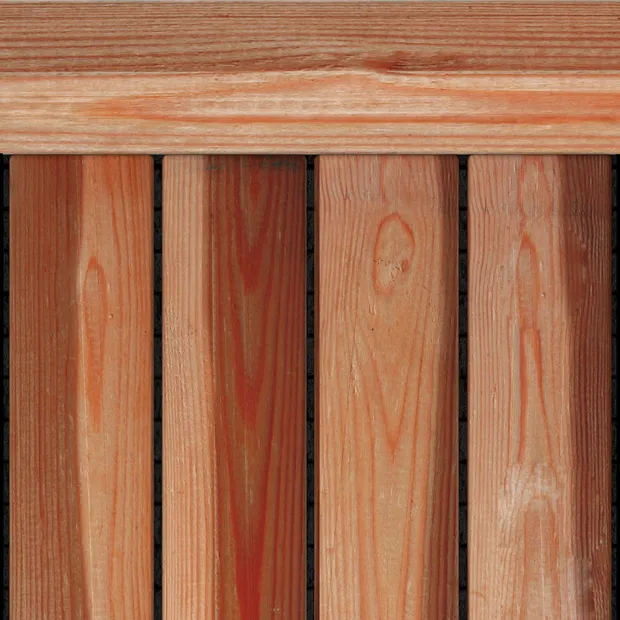
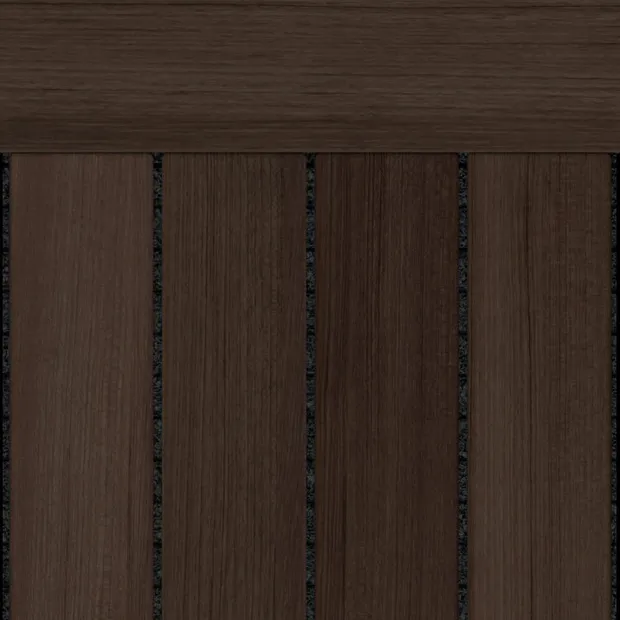
The composite decks arrived on the 3.0 and the Aurelius for exactly this reason, in four finishes at $300, described by the company as the look of natural wood without the upkeep. Whether that $300 is worth it is not a matter of taste, it is a matter of where the tank sits, and the reviews say so plainly.
I’m concerned about the red wood top - it’s simple almost rough construction and lower build quality compared to the high quality construction of the cold plunge box and components. The wood will not last in hot temperature or direct sun. It will need to be under a covered patio and out of direct Arizona sun. Marcus R., verified purchase, 4 out of 5, Cold Stoic 2.0. renutherapy.com
Another owner asked for the tub to arrive with more weatherproofing already done, having spent the first week applying sealant. A third wanted an untreated option because of the smell of treated cedar in a closed garage. Three different people, one conclusion: if the tank will live in the sun or indoors, the composite deck is the cheapest good decision on the configurator.
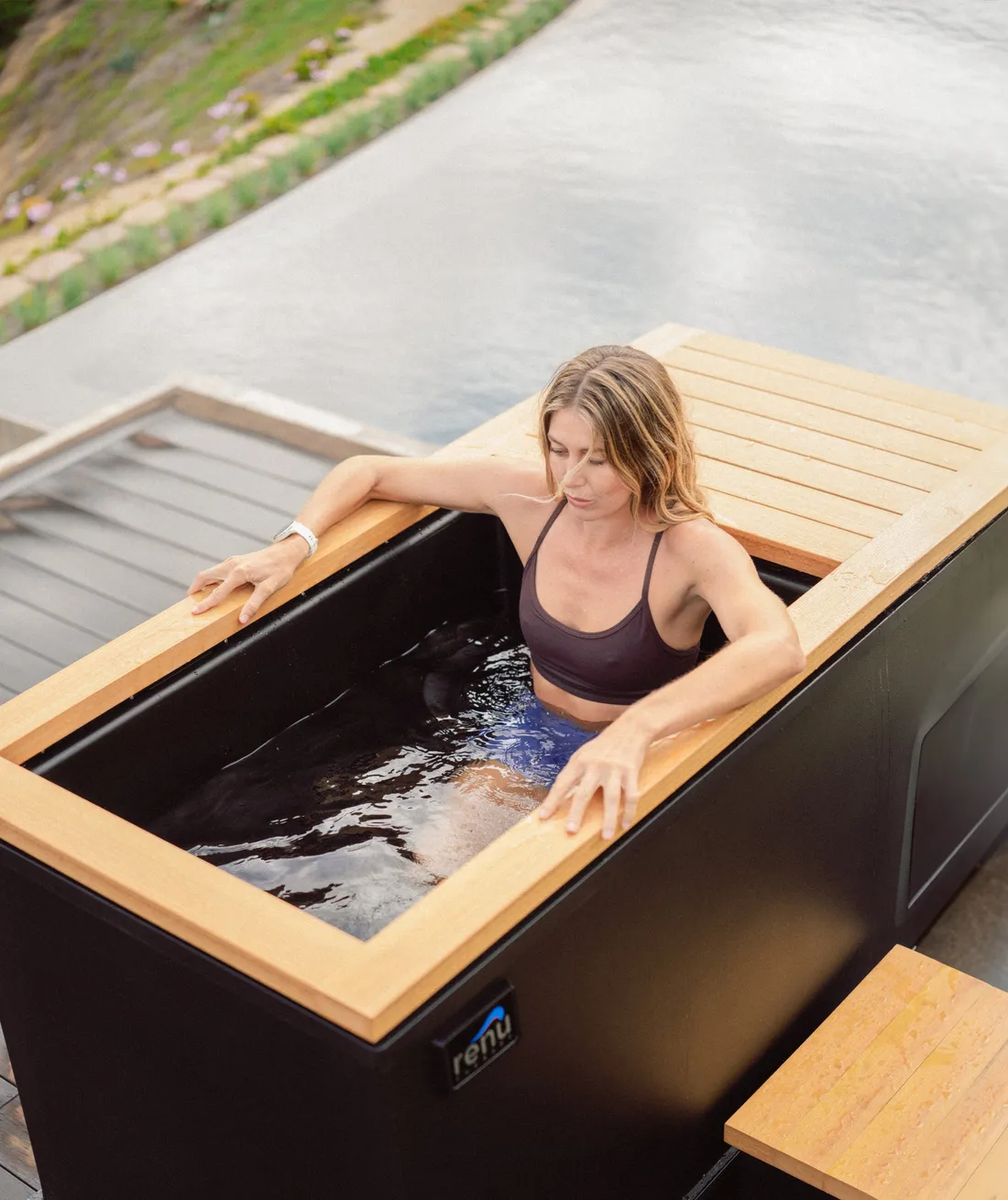
The Vero sidesteps the question entirely. Its step and trim use a marine grade non slip surface in three colors rather than wood, which is a different aesthetic and no maintenance at all.
Read the warranty by the part, not by the number
Renu advertises a five year limited warranty and it is real, but the interesting reading is which part gets which number. From the company's own FAQ and cut sheets:
Who is covered for how long
Renu Therapy warranty terms, from the FAQ page and the cut sheets.
The line that deserves a second look is the last one. The Siberian Pro is the most expensive tank in the range at $14,099, it has a wood body rather than a molded one, and it carries a one year warranty on everything. That is the company being consistent about materials rather than about price, and it is exactly the sort of thing that never appears in a comparison chart written by anyone other than the manufacturer.
Fifteen design patents and a phone number
Renu publishes a patents page, as US law requires of anyone marking a product, and the list is more informative than it means to be. As last revised on September 24, 2024 it names:
Design patents cover shape. They are what a company files when the thing it is worried about losing is the way the object looks, which is the first thing an overseas factory copies and the last thing a spec sheet can protect. Fifteen of them is not a marketing decision, it is a legal bill paid over five years.
Alongside that: every cut sheet carries a telephone number, 714-617-2007, and the tanks are described on each one as designed and assembled in Southern California. The reviews name the people who answer.
The customer service has been exceptionable. Tori and Chanel have answered my questions. Their knowledge and quick response truly make them an asset to Renu. Frances G., verified purchase, 5 out of 5, Vero, May 2026. renutherapy.com
The company itself started in 2020 with a broken jacuzzi. Bill Bachand, its founder, tells the story on his own about page: a four day ski trip to Mammoth Mountain, a jacuzzi at the resort that he describes as broken, four days of getting into it cold before and after skiing, and a drive home during which he turned to his wife Michelle and said he could build a cold tank that looked good, worked well and was easy to operate. The first Cold Stoic shipped three months later.
Six years on, the argument the company makes for itself is not that the water is colder. It is that the object is better made. Owners tend to reach for the same register when they describe it.
The Stoic 2 is designed and built with a level of thought and craftsmanship that make it not only perfectly functional, but an attractive addition to one's property. Really hard to see how they could do any better. William T., verified purchase, 5 out of 5, review titled Aircraft quality. renutherapy.com
So I decided on RENU and super happy I did. It is very well built, runs quiet, easy to operate controls, the list goes on! […] not the lowest cost but so far worth the small extra to own a quality product. Earl R., verified purchase, 5 out of 5, Cold Stoic 3.0, August 2025. renutherapy.com
So where does the compact one fit
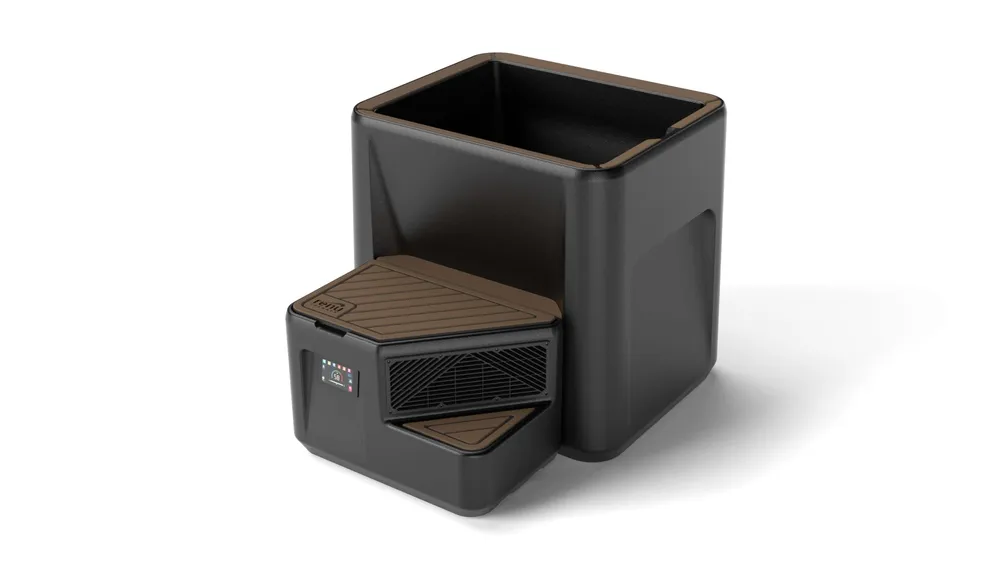
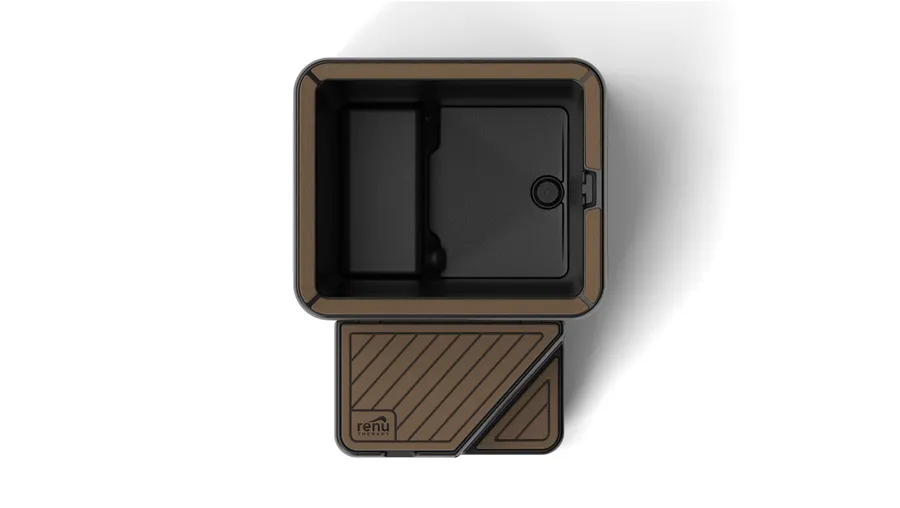
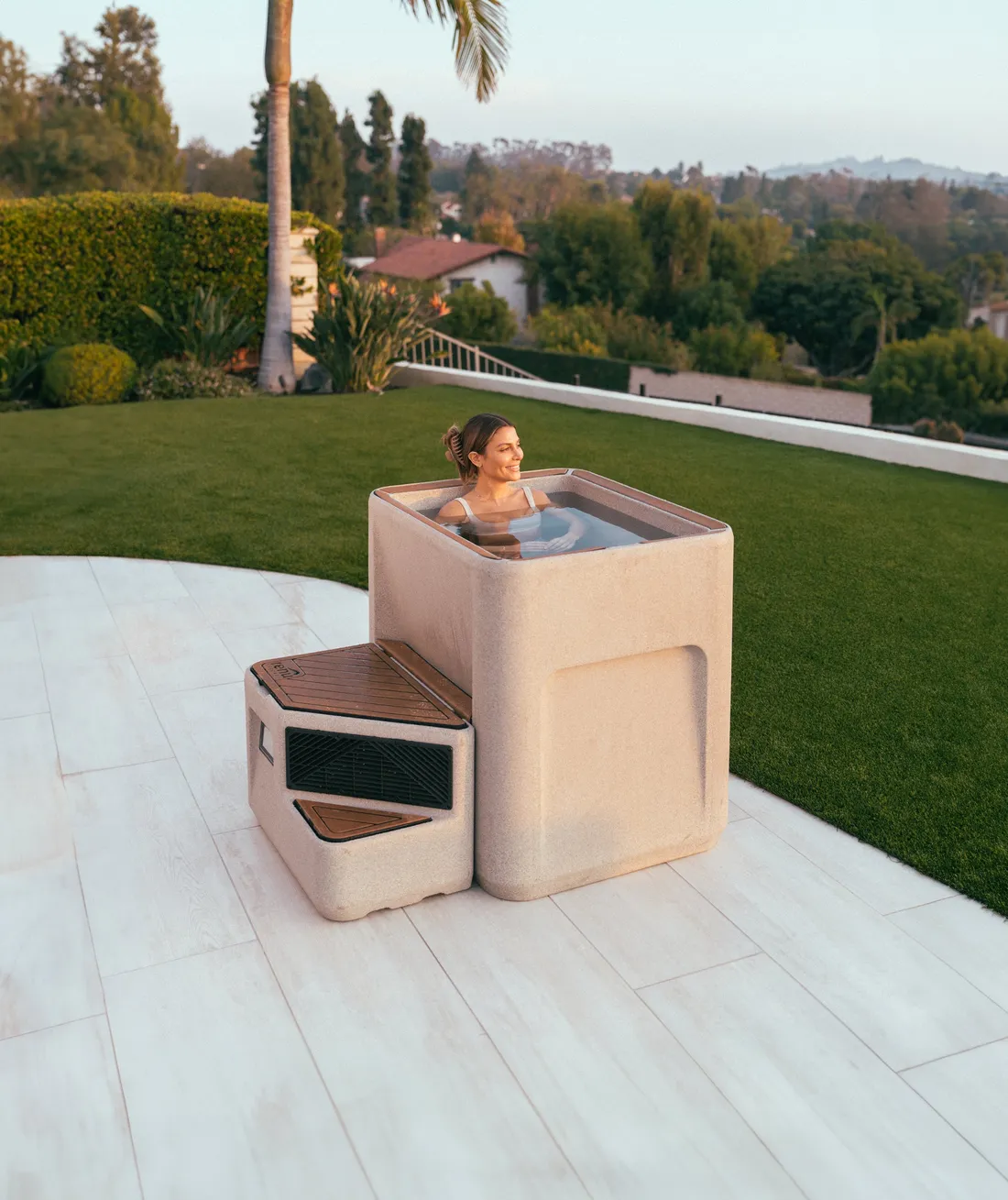
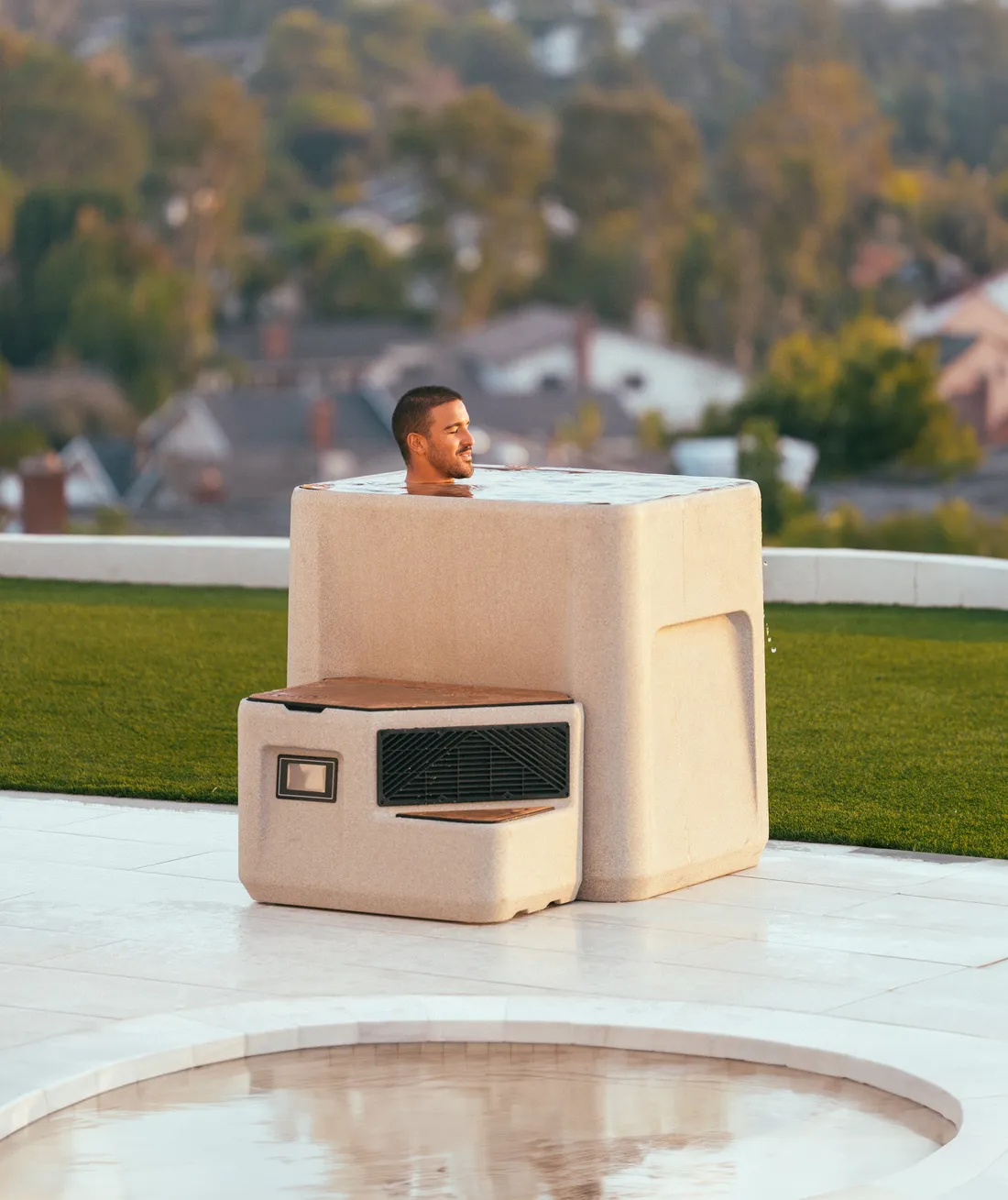
The Vero is the newest tank in the range and the only one that is genuinely small. Everything about it reads as a set of deliberate trades rather than a cheaper version of something else.
The Vero trade, in both directions
| What it gives up | What it buys |
|---|---|
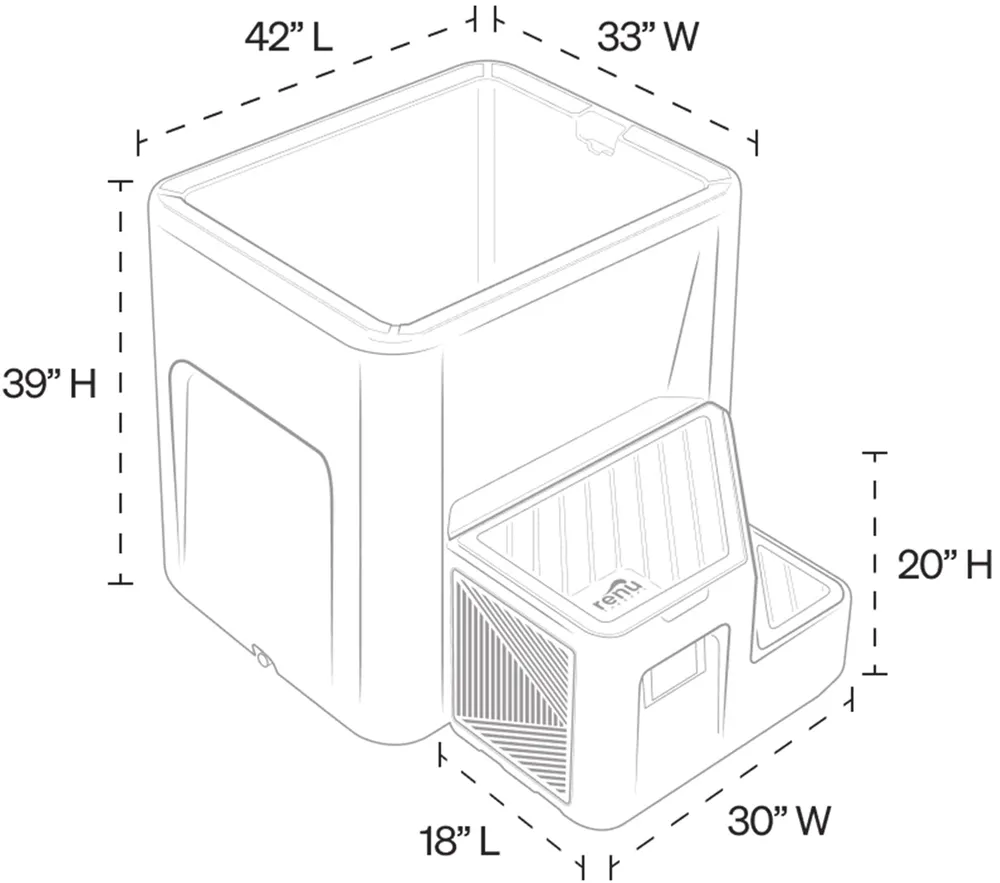
| 2 inches of insulation instead of 4, so 240 watts of standing draw instead of 130 | A tub footprint under ten square feet, upright, that fits a balcony or a garage bay |
| 62 dB at three feet instead of 58 | A 0.8 HP chiller, the largest in the range, so it pulls down fast and copes with heat |
| A single stage XL filter rather than the dual stage on the 3.0 | Tub and step separate: 153 pounds dry plus a 132 pound chiller, instead of 365 pounds in one piece |
| 12 color combinations instead of the 3.0's published six by six | Right or left hand orientation, so it can go against the wall it has to go against |
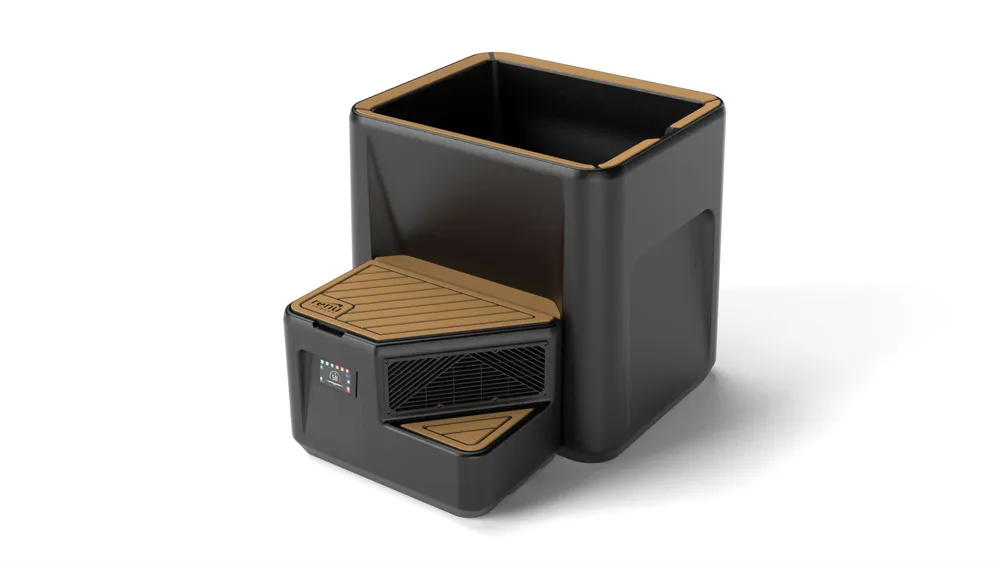
It fits people up to 6 feet 6 inches and 300 pounds, runs from 37 degrees to 100 with the hot option at $300 more so it does contrast work as well as cold, carries the same touchscreen and app as the flagship, and includes the insulated cover with child locks in the box. Filled with 95 gallons it weighs about 1,080 pounds, which is a slab and floor question rather than a delivery question.
And the honest headline on it is the one at the top of this article. It is the least expensive tank Renu makes and the most expensive one to hold at temperature. If it lives in a small space, that is a good trade. If it lives in a corner of a large garden where a Cold Stoic would have fit, it is a worse one. The company gives you everything you need to make that call, in a PDF, before you spend anything.
Before you buy anything, ask for these six numbers
Not just from Renu. From every company on your shortlist. The ones who can answer in writing within a day are the ones who measured. The ones who send back a paragraph about wellness did not.
- Average power over 24 hours, at the temperature you intend to hold.In watts, at a stated ambient. This is the electricity bill and it is the only figure that reveals the insulation.
- Perimeter insulation, in inches, and the floor separately.If the two numbers differ, ask for both. If nobody will draw the wall, that is the answer.
- Chiller size, and the ambient temperature it was rated at.A minimum water temperature without an ambient is a marketing number, not a specification.
- Noise in decibels, at a stated distance.The pump runs continuously. Quiet is not a claim, it is a measurement at 36 inches.
- Filter micron rating, number of stages, published change interval, and the price of a pack.Multiply the last two. That is the running cost nobody quotes you.
- Which parts the long warranty covers, and which the short one covers.Then ask when the extension has to be purchased. It is often inside the first year.
Renu Therapy answers five of those six in documents you can download without handing over an email address. The one it does not print is the ambient its minimum temperature was measured at, and nobody else prints it either, which is exactly why it is the most useful question you can put to a salesperson. None of this makes Renu the right tank for your yard. It makes the comparison possible, which is where most of these decisions are actually won or lost.
Where the numbers in this article live
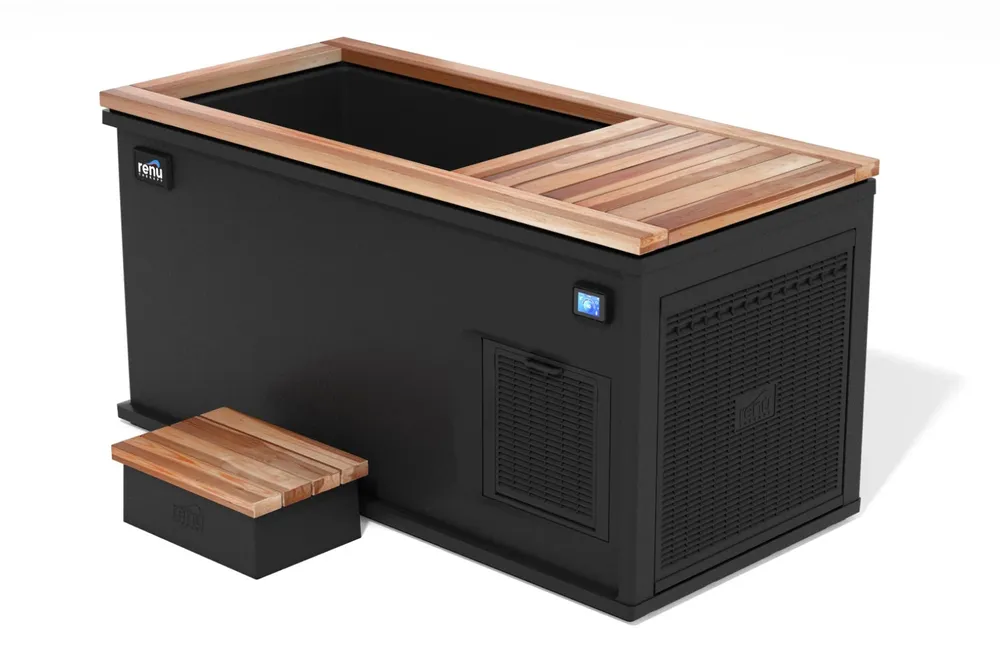
Every figure above comes from a page or a PDF on renutherapy.com. The comparison table carries the insulation depths and chiller sizes side by side, and each product page links its own cut sheet.
Prefer to talk it through with someone who has the specs open? Renu publishes a number on every cut sheet: 714-617-2007. Or start from the full range of cold plunge tanks.